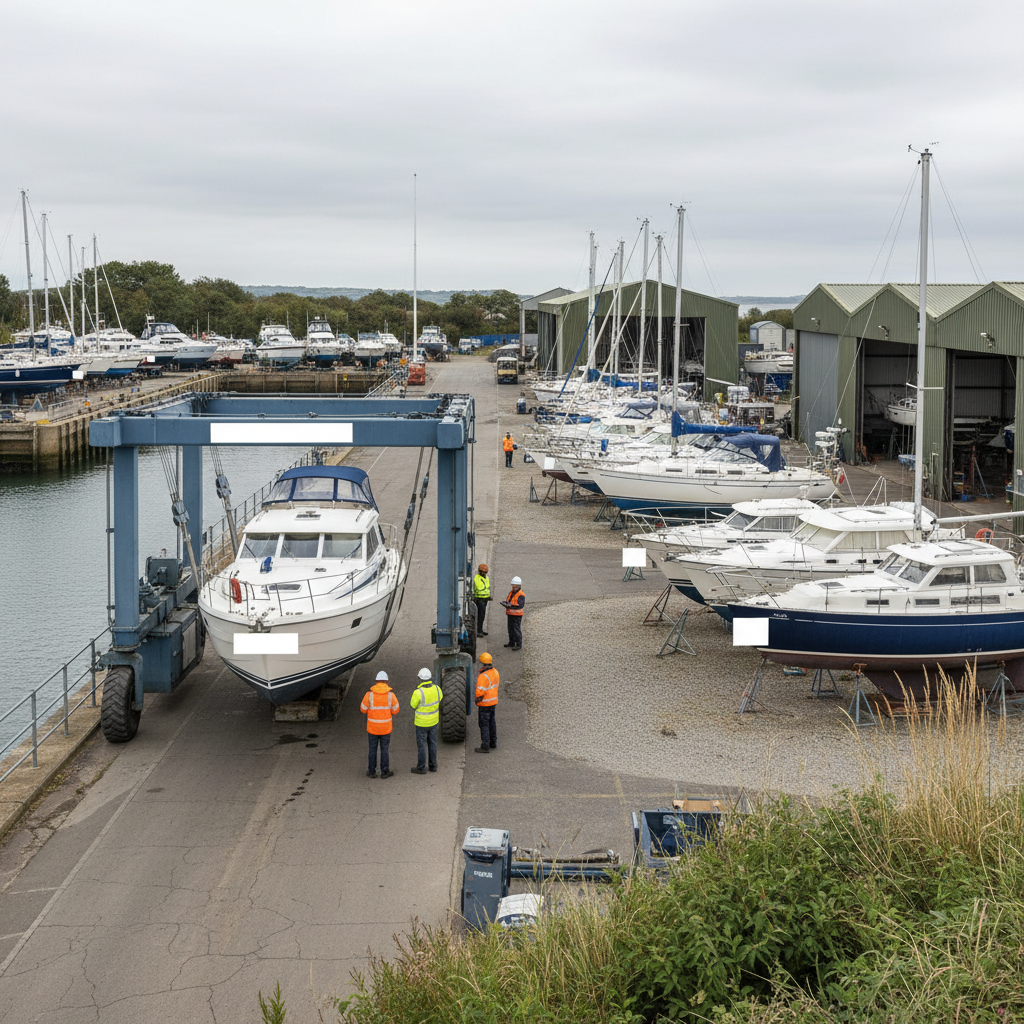
Managing a UK boatyard is a balancing act of moving parts, literally and figuratively. From the precision required for a 50-tonne hoist lift in a narrow tidal window to the intricate scheduling of marine engineers during the frantic spring commissioning period, the margin for error is razor-thin. In the past, many yards relied on T-cards, whiteboards, or complex spreadsheets that were out of date the moment a storm front rolled in from the Atlantic.
Modern operations are now turning to dedicated boat yard scheduling software to bring order to this chaos. By centralising every lift, block, and service job into a single source of truth, yard managers can finally stop reacting to emergencies and start orchestrating a profitable, safe, and efficient facility. In this guide, we explore how technology is redefining the workflow of the modern British marina workshop.
The Complexity of the UK Marine Workflow
In the UK, boatyards face unique challenges that make scheduling more complex than in many other regions. We deal with significant tidal ranges, unpredictable weather patterns, and a highly seasonal fleet. A delay in the morning tide at a yard in the Solent doesn't just push back one launch; it creates a domino effect that impacts the crane operator, the pressure-washing team, and the cradle storage layout for the next three days.
Without an integrated approach, communication breakdowns are inevitable. If the office books a survey but the workshop manager hasn't allocated the travel lift, the customer is left frustrated and the yard loses billable hours. This is where boat yard scheduling software becomes an essential asset rather than a luxury. It links the physical movement of the vessel with the administrative and technical tasks required to keep the business afloat.
Visualising Capacity and Resource Allocation
The heartbeat of a yard is its capacity. Knowing exactly how many boats can fit in the shed for winter storage or how many engines can be serviced simultaneously requires real-time data. Manual systems often fail to account for 'ghost capacity'—time lost between jobs when a technician is waiting for a boat to be shored up or for parts to arrive from a supplier.
Effective scheduling software provides a visual timeline (often via a Gantt chart or calendar view) that displays the availability of both personnel and infrastructure. For a comprehensive look at how this fits into your overall business strategy, our [Marine Business Management Guide](/blog/marine-business-management-guide) covers the broader operational landscape. By seeing a holistic view, managers can identify bottlenecks before they happen, such as three major refits all requiring the same overhead gantry at once.
25% Efficiency Gain
UK yards typically see a significant increase in billable hours by reducing 'dead time' between scheduled lifts and workshop tasks.
See This in Marina Yard Manager
Job Schedule
Try it free for 14 days — no credit card required
Start Free TrialSynchronising the Hoist and the Workshop
One of the most frequent friction points in a yard is the disconnect between the yard crew (the 'movers') and the engineers (the 'fixers'). A boat yard scheduling software platform ensures that when a boat is moved to the wash-bay, a notification is sent to the relevant department. If a winterisation job is flagged as urgent, the scheduling tool prioritises that vessel for the next available lift slot.
Consider a scenario where a technician discovers a faulty stern gland during a routine service. In a paper-based yard, this might take half a day to report, quote, and get approval. With digital tools accessible via [marinayardmanager.co.uk](https://marinayardmanager.co.uk), the engineer can log the requirement instantly on a tablet. The scheduler then sees that the boat needs to stay on the slings or in the cradle for an extra two days, and the calendar automatically shifts subsequent bookings to prevent a yard-wide logjam.
Features
Related Articles
Improving Customer Communication and Transparency
Marine customers in the UK are increasingly tech-savvy and expect a high level of transparency. They want to know precisely when their boat is hitting the water. When scheduling is managed via a digital platform, the office can provide accurate dates based on actual resource availability rather than 'best guesses.'
Automated alerts can be sent to owners when milestones are met. For example, once the scheduling software marks a 'bottom wash and antifoul' as complete, the system can automatically update the owner that their vessel is ready for the next phase. This reduces the volume of 'chaser' phone calls to the office, allowing staff to focus on high-value tasks rather than repetitive status updates.
Data-Driven Decision Making for Yard Growth
Beyond day-to-day operations, the data captured by boat yard scheduling software provides invaluable insights for the long-term health of the business. Are your lifts consistently running behind schedule on Tuesdays? High-quality reporting can reveal if this is due to staffing levels, equipment maintenance needs, or peak-time congestion.
By analysing historical scheduling data, yard owners can make informed decisions about investment. If the software shows that the workshop is consistently turning away work due to a lack of undercover space, the case for building an additional shed becomes backed by data rather than intuition. This level of insight is crucial for maintaining a competitive edge in the evolving UK marine market.
The Power of Visual Drag-and-Drop Scheduling
In a fast-paced marine environment, the ability to pivot is essential. Traditional spreadsheets and paper diaries are static; they cannot keep pace with a sudden gale warning or a delayed delivery of anti-fouling paint. This is where visual drag-and-drop scheduling transforms UK boat yard operations. By providing a dynamic interface, yard managers can move a haul-out slot or a rigging inspection with a simple mouse click, automatically updating all linked resources and staff notifications in real-time.
This intuitive approach eliminates the 'information silo' problem. When a project manager moves a vessel's launch date on the digital board, the system immediately identifies if that new slot conflicts with another booking or if the required crane operator is already assigned to a mast-stepping job. It turns a complex logistical puzzle into a manageable, visual workflow that any member of the team can understand at a glance, reducing the mental load on your foremen.
Synchronising Shore-Side Services and Subcontractors
UK boat yards rarely operate in isolation. A standard refit might involve internal engineers, external marine electricians, and specialist GRP repairers. Coordinating these moving parts manually often leads to 'bottlenecking,' where expensive specialists are standing idle because the boat hasn't been moved into the shed on time. Boat yard scheduling software acts as a single source of truth for every stakeholder involved in a project.
By granting controlled access to subcontractors or specific departments, you ensure that everyone is working from the same live schedule. If the pressure washing takes longer than anticipated due to heavy fouling, the subsequent polishing team is notified instantly of the delay. This level of synchronisation is particularly vital during the frantic 'spring commissioning' period in the UK, where every hour of daylight is a billable asset that cannot afford to be wasted.
Mitigating Tidal and Weather Risks with Digital Agility
For yards situated along the Bristol Channel or the South Coast, the tide is the ultimate project manager. A missed window can result in a twelve-hour delay, throwing the entire week's lifting schedule into disarray. Advanced scheduling tools allow managers to overlay tidal data and weather forecasts directly onto their work orders. This proactive planning ensures that high-risk movements are prioritised during optimal conditions.
Furthermore, digital scheduling allows for 'contingency mapping.' If a storm surge prevents safe lifting, the software enables the yard manager to quickly reallocate the workforce to indoor tasks—such as engine winterisation or interior joinery—without losing a day of productivity. This agility ensures that the yard remains profitable and the labour recovery rate stays high, regardless of what the British weather throws at the coastline.
Data-Driven Decisions: From Scheduling to Profitability
Beyond the daily logistics, the data captured by scheduling software provides invaluable insights into the long-term health of the business. By analysing historical scheduling data, UK yard owners can identify patterns in service demand and resource under-utilisation. Are your travel lifts sitting idle on Tuesdays? Is the workshop consistently over-capacity in November? These insights allow for more strategic pricing and staffing decisions.
Integrating scheduling with billing also ensures that no 'hidden' tasks go uncharged. When a technician logs time against a scheduled task on their mobile device, that data flows directly into the final invoice. This closes the gap between the work performed on the pontoon and the revenue collected in the office, ensuring that your UK boat yard isn't just busy, but consistently profitable and scalable.
Frequently Asked Questions
How does scheduling software handle emergency haul-outs?
The software allows managers to 'drag and drop' existing appointments to make room for emergencies. It immediately highlights which customers are affected so they can be proactively contacted.
Can the software manage different labour rates for different tasks?
Yes, most advanced platforms allow you to assign specific cost and sell rates to different technicians and task types, ensuring accurate invoicing following the scheduled work.
Does this work for small yards with only one crane?
Absolutely. In fact, yards with limited infrastructure benefit most from scheduling software because they have less room for error and must maximise the utilisation of every asset.
How does drag-and-drop scheduling handle multi-day marine projects?
The software allows you to span tasks across multiple days on a visual timeline. If a project is delayed, dragging the start date will automatically shift the subsequent days of work, maintaining the correct sequence of tasks while highlighting any future conflicts.
Can we manage both our dry-stack and workshop schedules in one system?
Yes. Modern boat yard scheduling software is designed to manage multiple 'resource pools.' You can view your dry-stack launches, workshop bays, and crane slots on a single unified calendar or filter them by department.
Is the schedule accessible to staff working out on the pontoons?
Absolutely. Our cloud-based system is mobile-responsive, meaning shipwrights and engineers can view their daily schedule, update task progress, and receive real-time changes directly on their tablets or smartphones while working on the vessels.
Related Reading
Written by
Hamish Lowry-Martin
Founder & Lead Developer
With 30 years in IT and 20 years developing business systems, Hamish spent the last decade working closely with marinas and boat yards — watching first-hand how they struggle with outdated tools. That hands-on observation led to Marina Yard Manager.
Learn more about our teamReady to Streamline Your Yard?
Start your 14-day free trial. No credit card required.
Start Free Trial