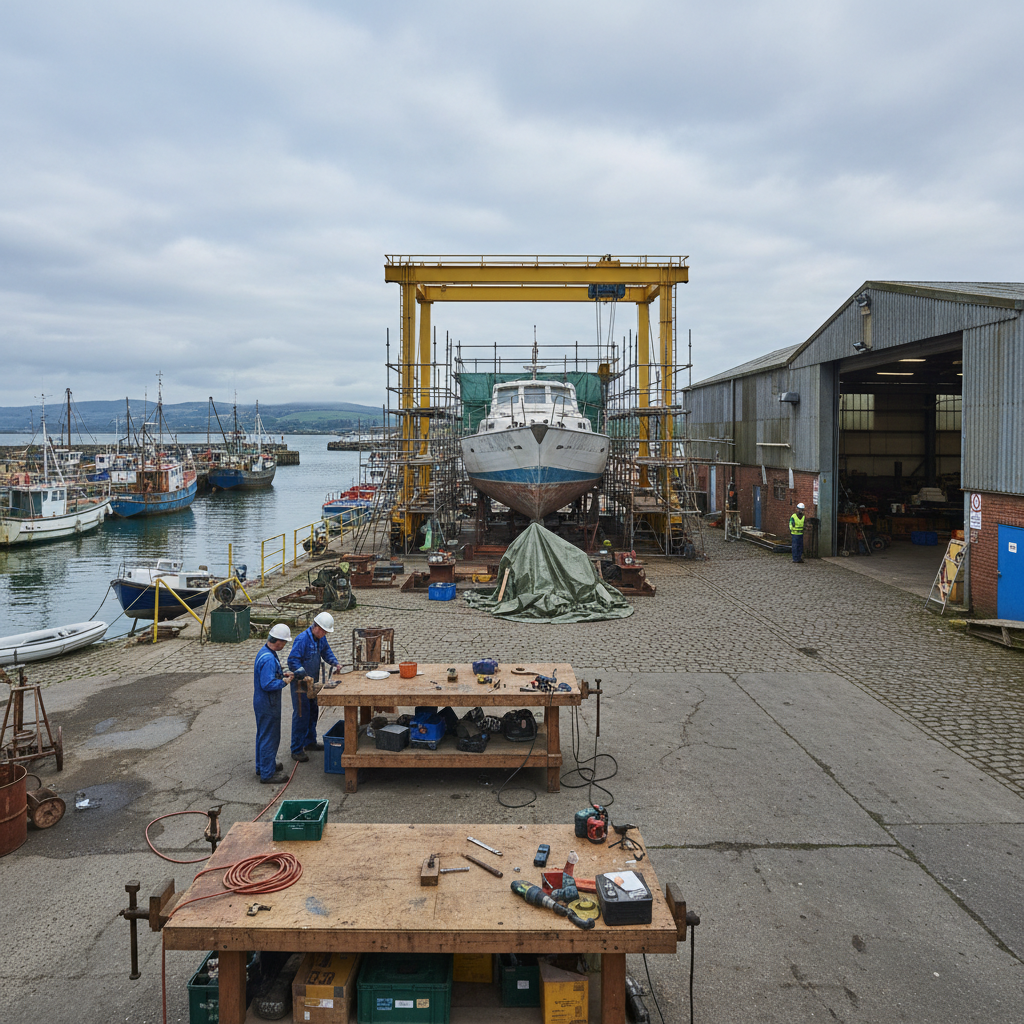
In the high-stakes environment of a UK boatyard, health and safety is far more than a box-ticking exercise for the Health and Safety Executive (HSE). From the movement of multi-tonne vessels to the handling of hazardous antifouling chemicals, the risks are constant and complex.
Ensuring robust marine workshop health and safety standards is essential for protecting your workforce, maintaining your reputation, and avoiding the significant financial penalties associated with non-compliance. This guide explores the practicalities of risk management in the modern British marine industry.
The Foundation of UK Boatyard Safety
The Health and Safety at Work etc Act 1974 forms the backbone of all safety protocols in the UK. For boatyard managers, this means providing a safe working environment, adequate training, and well-maintained equipment. Because marine environments are uniquely hazardous—combining water, electricity, heavy lifting, and volatile chemicals—standard industrial safety measures often require specific tailoring.
A rigorous approach to marine workshop health and safety begins with a culture of accountability. Every technician, from the most junior apprentice to the head shipwright, must understand that safety is a shared responsibility. This culture is easier to foster when integrated into everyday tasks, such as digital job cards or maintenance checklists. For a broader look at operational standards, refer to our [Marine Business Management: The Complete UK Guide](/blog/marine-business-management-guide).
Conducting Effective Risk Assessments
A risk assessment is a living document, not something to be filed away and forgotten. In a marine workshop, risks change with the seasons and the specific vessels on-site. When lifting a yacht for winter storage or performing grit-blasting on a commercial hull, the hazards differ significantly.
Key areas for assessment include working at height (on scaffolding or boat decks), confined space entry (bilges and tanks), and the use of heavy machinery like travel lifts and cranes. By documenting these risks digitally, yard managers can ensure that safety protocols are attached directly to work orders. This ensures that no technician begins a high-risk task without first acknowledging the necessary safety precautions.
664,000
According to the HSE, this is the average number of workers sustaining non-fatal injuries in Great Britain each year, highlighting the need for robust safety protocols.
See This in Marina Yard Manager
Job Profitability
Quoted
£950
Labour
£660
Materials
£331
Margin
£-41
Pressure wash and degrease hull
3.5h
£193
First coat blacking — port side
4h
£220
First coat blacking — starboard, anode removal
4.5h
£248
Switch between jobs to compare profitability • Mobile-friendly time logging
Try it free for 14 days — no credit card required
Start Free TrialHazardous Substances and COSHH Compliance
Marine workshops are hubs for hazardous materials, including resins, solvents, fuels, and antifouling paints. The Control of Substances Hazardous to Health (COSHH) regulations require UK yards to strictly control how these materials are stored and used. Improper handling not only poses a health risk to staff but can also lead to catastrophic environmental incidents in sensitive coastal waters.
Precision is required here—both in safety and in stock control. Knowing exactly what chemicals are on-site and where they are stored is a critical component of safety management. You can find more on managing high-value and hazardous components in our guide to [Boatyard Stock Management: Precision for UK Marine Workshops](/blog/precision-inventory-management-uk-workshops).
Features
Related Articles
Safe Movement of Vessels and Heavy Loads
The movement of boats on the hard-standing is one of the most dangerous periods in any yard’s daily routine. Whether using a boat hoist, a trailer, or a crane, the risk of structural failure or human error is always present. In the UK, the Lifting Operations and Lifting Equipment Regulations (LOLER) mandate that all lifting equipment must be fit for purpose and subject to regular statutory inspections.
Scheduling these movements safely requires clear communication. If the yard is overcrowded or staff are rushed, accidents are more likely to happen. Integrated [Marine Workshop Scheduling: How UK Yards Stay Organised](/blog/marine-workshop-scheduling-uk-yards) allows managers to de-conflict high-risk movements, ensuring that sufficient banksmen and operators are present without the pressure of competing tasks.
100%
The level of compliance required for COSHH and LOLER regulations to avoid significant fines and legal liability in the boatyard industry.
Electrical Safety and Hot Work Permits
The combination of water and electricity makes marine electrical safety paramount. All portable appliances must undergo PAT testing, and shore power installations must be regularly inspected. Similarly, 'hot work' such as welding or grinding requires a formal permit system to prevent fires, particularly on GRP hulls which can ignite and spread fire with frightening speed.
Using a digital platform like [Marina Yard Manager](https://marinayardmanager.co.uk) allows for the digitisation of Hot Work Permits and Electrical Safety Certificates. This creates a permanent, searchable audit trail that can be vital in the event of an insurance claim or a visit from a local authority inspector.
The Role of Training and PPE
Personal Protective Equipment (PPE) is the last line of defence. In a marine workshop, this includes high-visibility clothing, steel-toe boots, respirators for painting, and eye protection for machining. However, PPE is only effective if it is correctly maintained and if staff are trained to use it properly.
Training records should be kept up to date for all staff. If a technician’s forklift licence or first aid certificate is about to expire, the management system should alert the supervisor. This proactive approach ensures that only qualified individuals are performing specialised tasks, heavily reducing the likelihood of workplace injuries.
Frequently Asked Questions
What are the common HSE focus areas for marine workshops?
The HSE typically focuses on working at height, lifting operations (LOLER), COSHH compliance for paints and resins, and the prevention of slips, trips, and falls.
How often should I review my risk assessments?
Risk assessments should be reviewed annually as a minimum, or whenever there is a significant change in equipment, staff, or the specific type of boat being serviced.
Can software help with health and safety compliance?
Yes, software helps by centralising RAMS (Risk Assessment and Method Statements), tracking equipment maintenance, managing staff training logs, and ensuring safety checks are completed before job starts.
Related Reading
Written by
Hamish Lowry-Martin
Founder & Lead Developer
With 30 years in IT and 20 years developing business systems, Hamish spent the last decade working closely with marinas and boat yards — watching first-hand how they struggle with outdated tools. That hands-on observation led to Marina Yard Manager.
Learn more about our teamReady to Streamline Your Yard?
Start your 14-day free trial. No credit card required.
Start Free Trial