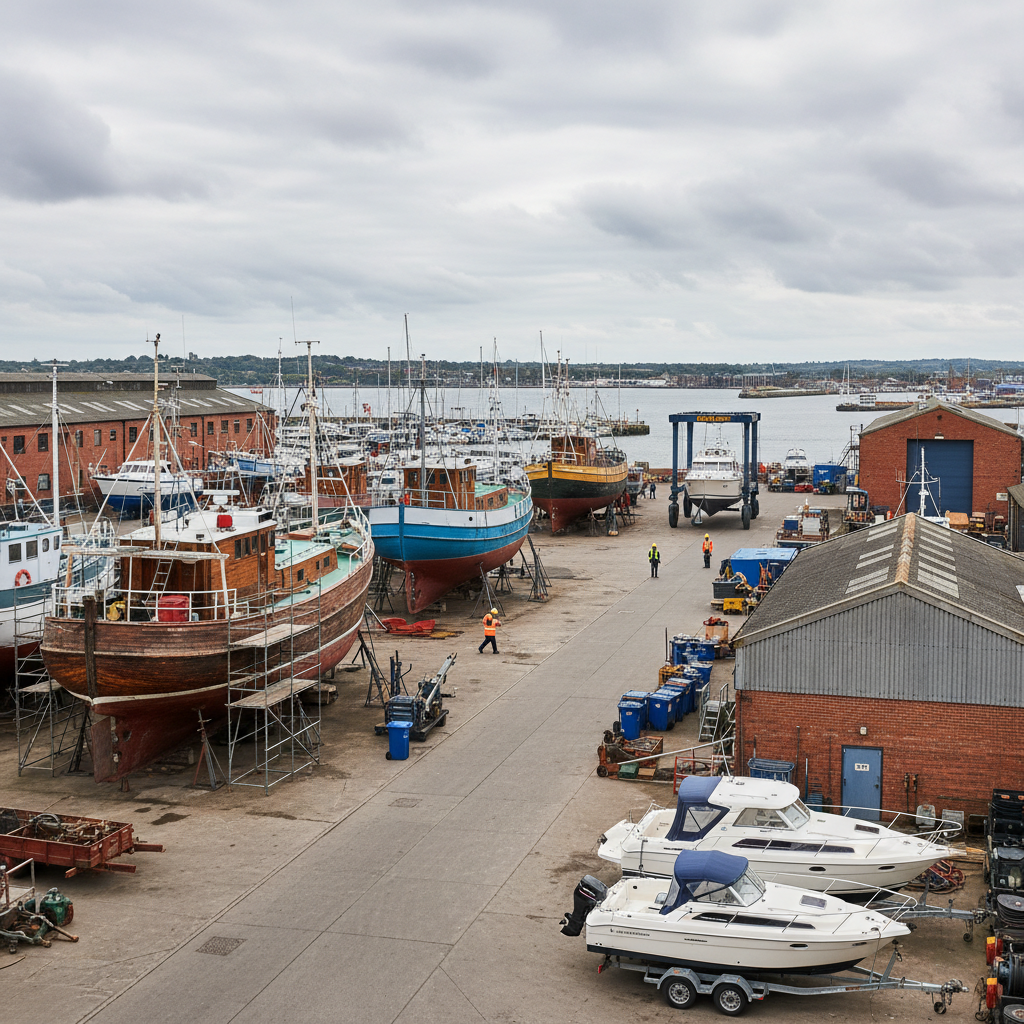
Running a boatyard or marina workshop in the United Kingdom involves balancing a unique set of high-risk activities. From mobile crane operations and pressure washing to working at height and handling hazardous marine antifouling, the list of potential hazards is extensive. In the eyes of the Health and Safety Executive (HSE), the 'occupier' of the yard bears the primary responsibility for ensuring these risks are managed effectively.
Compliance is not merely about ticking boxes to avoid a fine; it is about creating a workspace where your engineers, shipwrights, and subcontractors can work safely while protecting the surrounding environment. This guide explores the practicalities of maintaining a compliant boatyard, focusing on how UK-specific regulations like LOLER, PUWER, and COSHH apply to your daily operations.
Understanding the Regulatory Landscape
In the UK, the Health and Safety at Work etc. Act 1974 forms the foundation of all workplace safety. For boatyards, this is supplemented by specific regulations that target the machinery and substances common to the maritime industry. Managing a yard requires a deep understanding of LOLER (Lifting Operations and Lifting Equipment Regulations) for your hoists and cranes, and PUWER (Provision and Use of Work Equipment Regulations) for every tool in the workshop, from heavy-duty lathes to portable drills.
Crucially, the 'Management of Health and Safety at Work Regulations 1999' requires employers to carry out formal risk assessments for all activities. In a busy yard where a travel hoist might be operating alongside a contractor sanding a hull, these assessments cannot be static documents. They must be live, accessible, and inclusive of the specific interactions between different work zones.
Risk Assessments for High-Risk Boatyard Activities
Risk assessments should be the heartbeat of your compliance strategy. For a UK boatyard, these typically fall into three categories: site-wide risks, task-specific risks, and dynamic risks. A site-wide assessment covers general movement in the yard, such as pedestrian-vehicle segregation. Task-specific assessments focus on high-risk jobs like 'stepping a mast' or 'confined space entry' in a fuel tank.
Many managers find that digitising these assessments is the only way to ensure they are actually followed. By attaching a digital risk assessment to a specific job card within your management software, you ensure the technician reviews the safety protocols before they even pick up a tool. This creates a clear digital audit trail, proving that the yard has taken 'reasonably practicable' steps to ensure safety, which is vital should an inspector ever visit the site.
£1,000s in Fines
UK boatyards can face significant HSE fines and increased insurance premiums for failing to provide documented evidence of LOLER inspections and COSHH assessments.
Managing COSHH and Environmental Protection
The Control of Substances Hazardous to Health (COSHH) is particularly relevant for boat workshops. Marine paints, solvents, resins, and antifouling agents are often toxic or highly flammable. You must maintain a COSHH register that lists every hazardous substance on-site, its Safety Data Sheet (SDS), and the controls required to use it safely—such as specific RPE (Respiratory Protective Equipment).
Environmental compliance is the other side of the same coin. Under the Environmental Protection Act 1990, UK boatyards must ensure that wash-down water, which often contains heavy metals from antifouling, does not enter the watercourse untreated. Implementing a closed-loop pressure washing system is now standard practice, but your compliance records must also show regular maintenance of these interceptors and correct disposal of the collected sludge as hazardous waste.
Features
Related Articles
Lifting Operations: Staying Within LOLER
Lifting a multi-ton vessel over a crowded yard is perhaps the highest-risk activity a manager oversees. LOLER requires that all lifting equipment—cranes, hoists, slings, and shackles—be 'thoroughly examined' by a competent person. For equipment lifting people, this must happen every 6 months; for general lifting equipment, every 12 months.
Technology plays a massive role here in preventing oversight. Instead of relying on a paper file or a fading sticker on a crane leg, yard managers can use digital asset management to set automated alerts for upcoming LOLER inspections. By blocking out the equipment's availability in the yard diary when its certification is due to expire, you physically prevent a non-compliant lift from taking place.
3-Year Retention
Hazardous waste transfer notes must be kept for two years, but consignment notes for hazardous waste must be kept for three years under UK law.
Contractor Management and the 'Duty of Care'
Many UK yards rely on specialist subcontractors for rigging, electronics, or canopy making. Legally, the yard owner still holds a duty of care for these individuals while they are on-site. You must ensure they have their own public liability insurance, that they have read your site induction, and that their work doesn't create risks for your own staff or customers.
A common compliance pitfall is failing to track when a contractor’s insurance expires. A modern management system allows you to store contractor credentials centrally. If a rigger's insurance has lapsed, the system can flag this during the job assignment process, allowing you to pause work until the necessary documents are uploaded. This proactive approach significantly reduces the yard's liability profile.
Working at Height and Vessel Stabilisation
Falls from height remain a leading cause of workplace fatalities in the UK. In a boatyard context, this includes working on decks, climbing ladders, or using mobile elevated work platforms (MEWPs). The Working at Height Regulations 2005 require that you avoid working at height where possible, and when not possible, use equipment to prevent falls.
Parallel to this is the stability of vessels on the hard. Whether using traditional wooden blocking or modern steel cradles, the setup must be checked regularly, especially after high-wind events. Keeping a digital log of 'Yard Rounds'—where a staff member checks and confirms the stability of every boat—provides a robust defence in the event of a vessel falling, demonstrating that the yard maintained a rigorous inspection regime.
Frequently Asked Questions
How often do I need to review my boatyard risk assessments?
The HSE recommends reviewing assessments whenever there is a significant change in the work process, after an accident or near-miss, or at least annually to ensure they remain relevant.
Does LOLER apply to my manual boat winches?
Yes, LOLER applies to all lifting equipment, including manual ones. If the equipment is used for lifting or lowering loads, it must be fit for purpose, marked with its Safe Working Load (SWL), and subject to regular examination.
What is the best way to handle hazardous waste documentation?
You must keep 'Consignment Notes' for all hazardous waste removals (like old fuel or oily rags) for at least three years. Digital storage of these notes within your management software ensures they are easily retrievable during an audit.
Related Reading
Written by
Hamish Lowry-Martin
Founder & Lead Developer
With 30 years in IT and 20 years developing business systems, Hamish spent the last decade working closely with marinas and boat yards — watching first-hand how they struggle with outdated tools. That hands-on observation led to Marina Yard Manager.
Learn more about our teamReady to Streamline Your Yard?
Start your 14-day free trial. No credit card required.
Start Free Trial