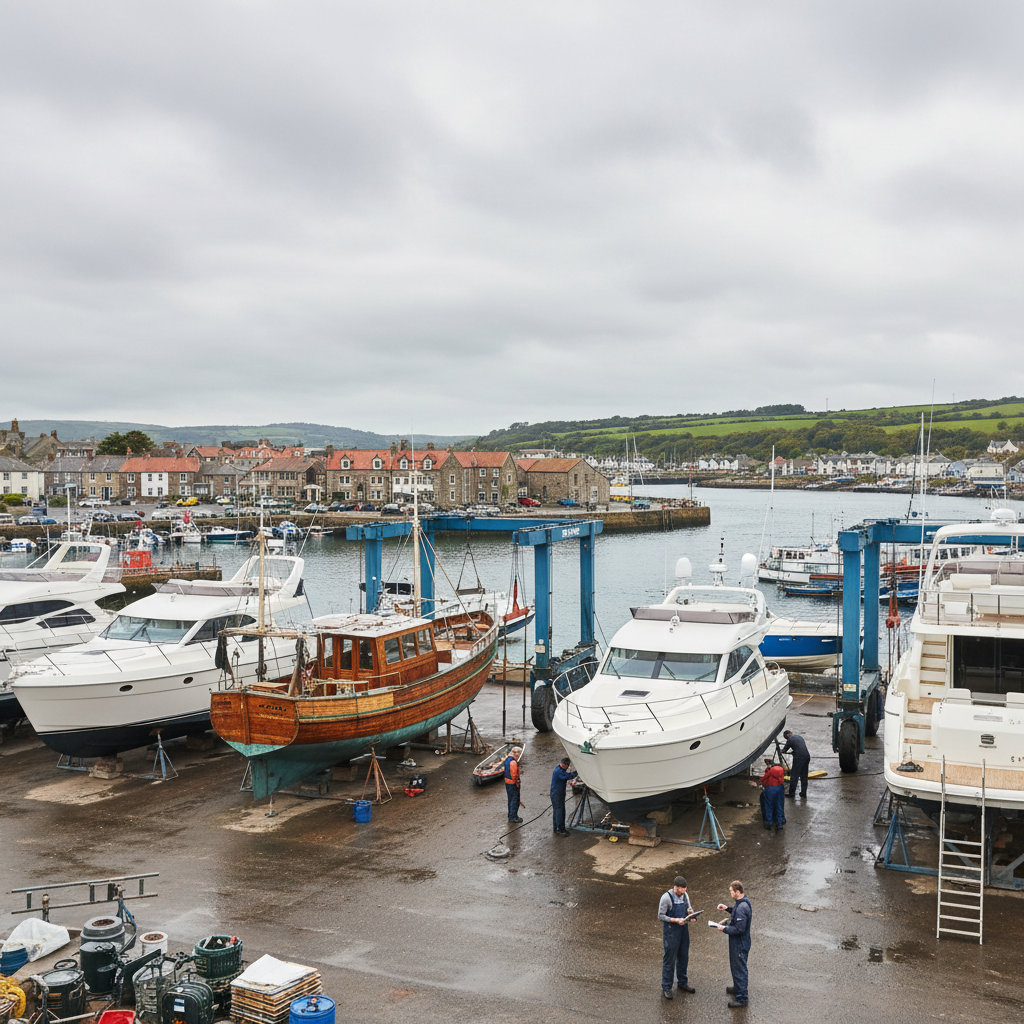
For the modern UK boatyard manager, the 'job card' is the heartbeat of the workshop. It is the primary document that tracks the lifecycle of a vessel from the moment it hits the slipway to the final sign-off after a complex engine overhaul or hull repair. However, relying on physical folders, handwritten notes, and grease-stained spreadsheets often leads to 'revenue leakage'—the silent killer of profitability in the marine industry.
Transitioning to a dedicated marine job card software UK solution isn't just about going paperless; it is about technical precision. In this guide, we explore how digital job cards integrate with your wider business management to ensure every billable hour is captured, every nut and bolt is accounted for, and your technicians spend more time on the tools and less time on the clipboard.
The Anatomy of a Technical Digital Job Card
A standard paper job card often captures the 'what' and the 'who', but usually fails to capture the 'when' and 'how much' with any real accuracy. In a technical boatyard environment, a digital job card acts as a live data hub. It should include version-controlled work instructions, real-time labour tracking, and automated parts allocation.
When a marine engineer begins a service on a Volvo Penta D6, for example, the digital system allows them to clock onto a specific task. This eliminates the guesswork associated with at-the-end-of-the-day timesheet entries. By using marine job card software UK boatyards can ensure that technical specifications and torque settings are attached directly to the job, providing a safety net for junior technicians and maintaining high standards across the yard.
Integrating Inventory and Parts Allocation
One of the biggest hurdles in UK boatyard management is the disconnect between the workshop and the stores. Without an integrated system, a technician might take three litres of anti-foul or a specific fuel filter from the shelf without it ever reaching the final invoice. This results in skewed stock levels and lost margin.
By linking your job cards to your central stores, parts are 'consumed' in real-time. This level of [Boatyard Stock Management: Precision for UK Marine Workshops](/blog/precision-inventory-management-uk-workshops) ensures that your inventory levels are always accurate. When a job card is closed, the software automatically generates a pick-list or deducts the items from stock, alerting the manager if reordering is required. This technical synchronisation is the foundation of a profitable workshop.
15-20% Revenue Increase
UK yards typically see a significant boost in billable hours simply by capturing 'lost' time through digital job cards.
See This in Marina Yard Manager
Job Schedule
Try it free for 14 days — no credit card required
Start Free TrialSynchronising Scheduling with Job Execution
Efficiency in a boatyard is determined by how well the hoist schedule matches the workshop capacity. If a job card for a hull polish is delayed due to weather, it has a knock-on effect on the next vessel waiting for the cradle. Digital job cards allow for dynamic rescheduling that paper-based systems simply cannot match.
Effective [Marine Workshop Scheduling: How UK Yards Stay Organised](/blog/marine-workshop-scheduling-uk-yards) requires a live feed of progress. If a technician flags a broken stud during a manifold replacement, the job card is updated instantly. The yard manager can then see the delay on their dashboard and adjust the afternoon's lift-in schedule accordingly, preventing a bottleneck at the crane and keeping the yard moving smoothly.
Features
Related Articles
Data Integrity and Customer Transparency
In the event of a dispute over a bill, having a comprehensive digital trail is invaluable. Modern job card software allows technicians to take photos of damaged components before and after repair, attaching them directly to the digital record. This builds immense trust with the boat owner, who can see exactly why additional labour hours were required.
Furthermore, this data feeds into your broader [Marine Business Management: The Complete UK Guide](/blog/marine-business-management-guide). By analysing the data from hundreds of completed job cards, you can identify which types of work are the most profitable and which technicians are the most efficient. This technical oversight is what separates a struggling yard from a thriving marine enterprise.
Streamlining the Invoicing Cycle
The traditional 'end of month' invoicing crunch is a stressor for many UK marina managers. Information is often missing, and the administrative staff have to chase engineers for clarification on scribbled notes. Marine job card software UK prevents this by making 'work completed' data immediately available for review.
At [marinayardmanager.co.uk](https://marinayardmanager.co.uk), we advocate for a 'continuous billing' mindset. As soon as a job card is signed off by the foreman, the invoice can be drafted with a single click. This drastically reduces the 'work-in-progress' (WIP) figure on your balance sheet and significantly improves your yard's cash flow, ensuring you have the capital available for upcoming seasonal demands.
30% Reduction in Admin
Digital integration removes the need for manual data re-entry between the workshop and the accounts office.
Frequently Asked Questions
Can digital job cards work in areas with poor Wi-Fi, like a shed or pontoon?
Yes, many marine job card systems offer offline modes or local caching, allowing technicians to record time and parts which then sync once they return to a connected area.
How do digital job cards improve health and safety compliance?
Digital cards can include mandatory safety checklists or RAMS (Risk Assessments and Method Statements) that a technician must acknowledge before they can start timing onto a hazardous task.
Will my older staff find the software difficult to use?
Modern marine software is designed with 'big button' interfaces for tablets and smartphones, often making it faster and easier for staff to use than finding a pen and a clean piece of paper.
Related Reading
Written by
Hamish Lowry-Martin
Founder & Lead Developer
With 30 years in IT and 20 years developing business systems, Hamish spent the last decade working closely with marinas and boat yards — watching first-hand how they struggle with outdated tools. That hands-on observation led to Marina Yard Manager.
Learn more about our teamReady to Streamline Your Yard?
Start your 14-day free trial. No credit card required.
Start Free Trial